“Digital marketing” is a big term that covers many channels. Some bring free traffic over time, while others bring fast results but cost money every day. In Pakistan, DataReportal’s Digital 2027 report counted 149 million internet users and 94.1 million social media user identities in late 2026, so the audience for every channel keeps growing.
This guide explains each type, how it works, a real example, and how to choose the right mix. If you are new to the field, start with our guide on what digital marketing is.
The 7 Types of Digital Marketing Explained
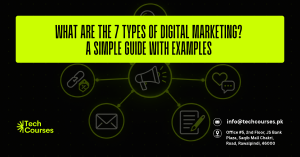
The 7 main types of digital marketing are SEO, PPC, social media, content, email, affiliate, and influencer marketing. Some are organic and build results slowly. Others are paid and work as soon as you spend.
1. Search Engine Optimization (SEO)
SEO is the process of improving a website so it ranks higher in Google’s free (organic) results. When people search for something you offer, good SEO helps your page show up near the top.
How SEO works:
- Keyword research: finding the exact words people type into Google
- On-page SEO: using those keywords in titles, headings, and page content
- Technical SEO: making the site fast, mobile-friendly, and easy for Google to crawl
- Off-page SEO: earning links from other trusted websites
- Local SEO: ranking in Google Maps through a Google Business Profile
Example: A Rawalpindi bakery ranks a page for “custom birthday cakes in Rawalpindi” and gets free visitors every day.
Keep in mind: SEO is slow. Google itself has said that SEO usually needs four months to a year to show its full benefit. To see how SEO fits inside the wider field, read our comparison of digital marketing vs an SEO course.
2. Pay-Per-Click (PPC) Advertising
PPC is paid advertising where you are charged when someone clicks your ad. The most common example is Google Ads, where your ad appears at the top of search results for the keywords you choose.
How PPC works: you pick keywords and a daily budget, then compete in an auction where your bid and ad quality decide your position.
Example: An AC repair company runs a Google Ads campaign for “AC repair near me” during summer and gets calls on the same day the ads go live.
Keep in mind: Results are fast, but they stop the moment you stop paying. Paid ads on Facebook and Instagram are also popular, though they work differently from search ads. Our guide on Google Ads vs Meta Ads explains the difference.
3. Social Media Marketing
Social media marketing means using platforms like Facebook, Instagram, TikTok, LinkedIn, and YouTube to build brand awareness and talk to customers. It includes both free (organic) posts and paid social ads.
What it includes: posting reels and stories, replying to comments and messages, running ads targeted by age, city, and interest, and tracking reach and clicks.
Example: A clothing brand posts short try-on reels on Instagram and runs a small ad to women aged 18 to 34 in Islamabad and Rawalpindi.
4. Content Marketing
Content marketing is creating useful material, such as blogs, videos, and guides, that solves your audience’s problems. It builds trust first and sells later.
Common formats: blog posts, YouTube tutorials, free e-books, webinars, and case studies.
Example: A software company publishes a free “how to file your tax return” guide. Readers learn something useful, then some of them try the company’s paid tool.
Content marketing and SEO work closely together, because good content is what ranks on Google. It also feeds each stage of a sales funnel, from first visit to final purchase.
5. Email Marketing
Email marketing is sending targeted messages, offers, and newsletters to people who have agreed to receive them. Because you own your email list, no platform algorithm controls who sees your message.
Popular emails: welcome series, abandoned cart reminders, newsletters, and offers sent to a specific group (segment).
Example: An online store sends an automatic email to shoppers who left items in their cart, reminding them to complete the order.
6. Affiliate Marketing
Affiliate marketing is a performance-based model where a business pays partners a commission for each sale or lead they bring through a unique tracking link. The business only pays when a result happens.
How it works:
- A partner (affiliate) joins a brand’s program
- The affiliate gets a special tracking link
- The affiliate shares the link in a blog, video, or social post
- When someone buys through that link, the affiliate earns a commission
Example: A tech blogger reviews budget earbuds and links to them through the Daraz Affiliate Program. Commission rates on Daraz change by product category.
7. Influencer Marketing
Influencer marketing means partnering with creators who already have a loyal following to promote your product or service. It works because people often trust a creator they follow more than a regular ad.
Example: A skincare brand sends products to a micro influencer (a creator with a smaller but highly engaged following) for an honest review video. Paid partnerships should always be clearly labeled.
How the 7 Types of Digital Marketing Compare
Each type of digital marketing differs in cost, speed, and main goal. Here is a quick side-by-side view.
| Type | Paid or Organic | Speed of Results | Best For |
|---|---|---|---|
| SEO | Organic | Slow (months) | Long-term free traffic |
| PPC | Paid per click | Fast (same day) | Quick leads and sales |
| Social Media | Both | Medium | Awareness and engagement |
| Content Marketing | Organic | Slow | Trust and education |
| Email Marketing | Owned channel | Fast once list is built | Repeat sales |
| Affiliate Marketing | Paid per result | Medium | Low-risk sales growth |
| Influencer Marketing | Paid | Fast | Reaching new audiences |
Other Digital Marketing Types You May Hear About
Some guides list 8 to 12 types of digital marketing. Most extras are umbrella terms or support skills behind the main 7.
- Search Engine Marketing (SEM): an umbrella term for search visibility. Many people use it to mean paid search only, while others include SEO too.
- Mobile and Video Marketing: formats like SMS, WhatsApp, and video that run inside social, email, content, and PPC.
- Analytics and CRO: measuring results and improving sign-up or sales rates. Tools like Google Analytics 4 show which of the 7 types is actually working.
Which Type of Digital Marketing Should You Start With?
The right type of digital marketing depends on your goal, budget, and timeline. Most businesses do best with two or three channels that support each other, not all seven at once.
- Need leads this week? Start with PPC.
- Want free traffic for years? Invest in SEO and content marketing.
- Selling to young buyers? Focus on social media and influencer marketing.
- Have past customers? Use email marketing to bring them back.
- Want to pay only for sales? Try affiliate marketing.
A local business often pairs SEO for steady traffic with PPC for quick leads.
Final Thoughts
Knowing the 7 types of digital marketing is the first step. Using them well takes hands-on practice with real tools and real campaigns. At Tech Courses, our in-person Digital Marketing Course in Rawalpindi trains you face to face in a classroom, with an instructor guiding you through live projects step by step.
Frequently Asked Questions
What are the 7 types of digital marketing?
They are SEO, PPC advertising, social media marketing, content marketing, email marketing, affiliate marketing, and influencer marketing. Together, they cover organic search, paid ads, social platforms, owned channels, and partnerships.
Which type of digital marketing is best for beginners?
Social media and content marketing are the easiest to start, because you can practice free on your own pages. SEO is also a strong first skill.
What is the difference between SEO and PPC?
SEO brings free traffic from Google’s organic results, but it takes months to build. PPC places paid ads at the top of results and brings clicks right away, but traffic stops as soon as the budget runs out.
Is SEM one of the 7 types of digital marketing?
SEM is usually an umbrella term, not a separate type. Many marketers use it to mean paid search ads, so most guides list PPC instead.
Summary
Digital marketing has 7 main types: SEO, PPC, social media, content, email, affiliate, and influencer marketing. SEO and content marketing build free, long-term traffic, while PPC and influencer marketing bring faster results at a direct cost, and email and affiliate marketing help turn interest into sales. The best strategy mixes two or three types that fit your goal, budget, and timeline instead of trying all seven at once.