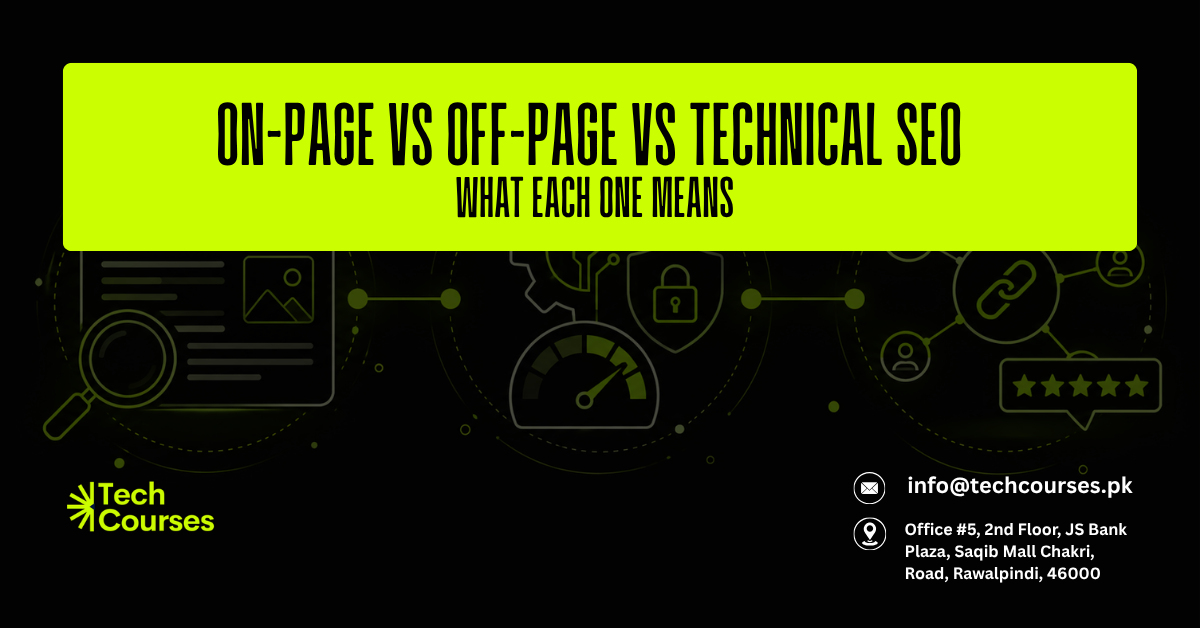
On-page SEO is the work you do on your pages, like content, titles and internal links. Technical SEO makes sure search engines can crawl, load and understand your site. Off-page SEO is the trust your site earns from other websites through links, mentions and reviews.
Most SEO guides split the work into three parts. The problem is that many of them stop at definitions and leave you guessing where to start. This guide explains what each type means, where they overlap and which one to fix first. SEO is one part of digital marketing, so it helps to see how the three parts fit together.
What Is On-Page SEO?
On-page SEO means improving the content and HTML elements of a single page so search engines and readers understand what it is about. You control all of it, and it covers your copy, titles, headings, images and internal links.
The main on-page SEO elements are:
- Title tag and meta description: the headline and summary shown in search results, written around one main keyword
- Headings (H1 to H3): one H1 per page, with H2 and H3 headings that split the topic clearly
- Search intent match: content that answers what the searcher actually wants, not just the keyword
- Internal links: links to related pages with descriptive anchor text
- Images: compressed files with clear file names and alt text
For example, a bakery page that uses “custom birthday cakes in Islamabad” in its title, headings and first paragraph is doing on-page SEO. If your site runs on WordPress, our beginner’s guide to WordPress shows how pages and settings work.
What Is Off-Page SEO?
Off-page SEO covers everything that happens outside your website that tells search engines your site can be trusted. The biggest part is backlinks, which are links from other websites to yours, along with brand mentions and reviews.
The main off-page SEO activities are:
- Backlinks: links from other relevant sites. One link from a trusted site in your field is worth more than many from weak ones
- Brand mentions: other sites naming your business, even without a link
- Reviews and citations: Google Business Profile reviews and listings in local directories, which matter most for local SEO
- Digital PR and guest posts: useful content placed on sites your audience already reads
- Content sharing: social and video posts that help people discover your pages, which can lead to links
Off-page SEO takes time, and shortcuts are risky. Buying links or joining link schemes goes against Google’s spam policies and can cause your pages to lose rankings.
What Is Technical SEO?
Technical SEO is the work that lets search engines crawl, render and index your site without problems. It also covers speed, mobile usability, security and site structure, which affect both rankings and how people experience your pages.
The main technical SEO areas are:
- Crawling: a clean robots.txt file and an XML sitemap so search engines can find your pages
- Indexing: correct canonical tags, no accidental noindex tags and no duplicate pages competing with each other
- Security and mobile use: HTTPS on every page and a layout that works on phones
- Redirects and errors: 301 redirects for moved pages and fixes for broken links
- Core Web Vitals: loading, responsiveness and layout stability, measured on real visits
Google’s good scores are an LCP (loading) of 2.5 seconds or less, an INP (responsiveness) of 200 milliseconds or less and a CLS (visual stability) of 0.1 or less, measured at the 75th percentile of real visits. INP replaced FID in March 2024, so guides that still list FID are out of date.
Core Web Vitals are a light ranking signal. Their bigger value is a smoother experience for visitors, so do not trade good content for a perfect score. Google Search Console is the best free place to check indexing and Core Web Vitals problems.
On-Page vs Off-Page vs Technical SEO: Side-by-Side Comparison
The three types differ by location, control and speed. On-page work happens on your pages, technical work happens in your site setup, and off-page work happens on other websites that you do not own.
| On-Page SEO | Technical SEO | Off-Page SEO | |
|---|---|---|---|
| Focus | Content and page elements | Crawling, indexing and site health | Authority and trust |
| Where | Inside each page | Site setup and code | Other websites and platforms |
| Your control | Full | Full, but may need a developer | Partial |
| Examples | Titles, headings, internal links | Sitemap, HTTPS, Core Web Vitals | Backlinks, mentions, reviews |
| Speed of results | Often after pages are re-crawled | Often after fixes are re-crawled | Usually the slowest |
| If ignored | Pages miss search intent | Pages may not be indexed | Competitors look more trusted |
Where On-Page and Technical SEO Overlap
Some tasks sit between two types, which is why guides disagree. A simple test helps: if it is about what the page says, it is on-page. If it is about how bots and browsers handle the page, it is technical.
- Internal links: choosing anchor text is on-page, while making sure links are crawlable and not broken is technical
- Structured data: you add it to the page, but testing that it is valid is technical
- Images: alt text is on-page, while file size and lazy loading are technical
Which SEO Type Should You Fix First?
Start with technical SEO, then on-page, then off-page. A page that search engines cannot crawl cannot rank, and a page that does not match intent gives backlinks little to work with.
Use these signs to find your biggest gap:
- Pages missing from Google: this is a technical problem, so check indexing in Search Console
- Pages indexed but ranking low for your target keyword: this is an on-page problem, so improve intent match, headings and internal links
- Good pages, but rivals with similar content still rank higher: this is an off-page gap, so build links, reviews and mentions
Local businesses should set up Google Business Profile early, because reviews and listings are strong off-page signals for local searches. Our guide on why every local business needs a Google Business Profile explains how. If you serve customers in Rawalpindi, see our post on digital marketing for small businesses in Rawalpindi.
Google’s guidance says the usual SEO basics apply to its AI features, so crawlable and helpful pages are still the starting point for showing up in AI Overviews. Track your progress with Google Analytics 4.
Frequently Asked Questions
Which type of SEO is the most important?
None works alone, but technical SEO comes first because it decides whether your pages can be found and indexed. After that, on-page SEO makes pages relevant, and off-page SEO adds trust. The best focus depends on where your biggest gap is.
Is technical SEO part of on-page SEO?
Some experts treat it that way because both happen on your website. Most guides keep them separate. On-page covers what is on a page, such as content and headings. Technical covers how the site works, such as crawling, speed and security.
How long do SEO results take?
It depends on your site, your competition and how often Google re-crawls your pages. Technical and on-page fixes can show an effect once pages are re-crawled. Off-page results usually take longer because links and mentions build over time.
Can a small local business skip off-page SEO?
It should not skip it, but it can keep it simple. Start with a complete Google Business Profile, steady reviews from real customers and listings in trusted local directories. These give clear trust signals without a big link-building budget.
Conclusion
Learning SEO is easier when an instructor walks you through real pages and real problems. Tech Courses teaches digital marketing through in-person, instructor-led classes in Rawalpindi. For structured guidance, explore our Digital Marketing Course, or read digital marketing vs SEO course to see how SEO fits in.