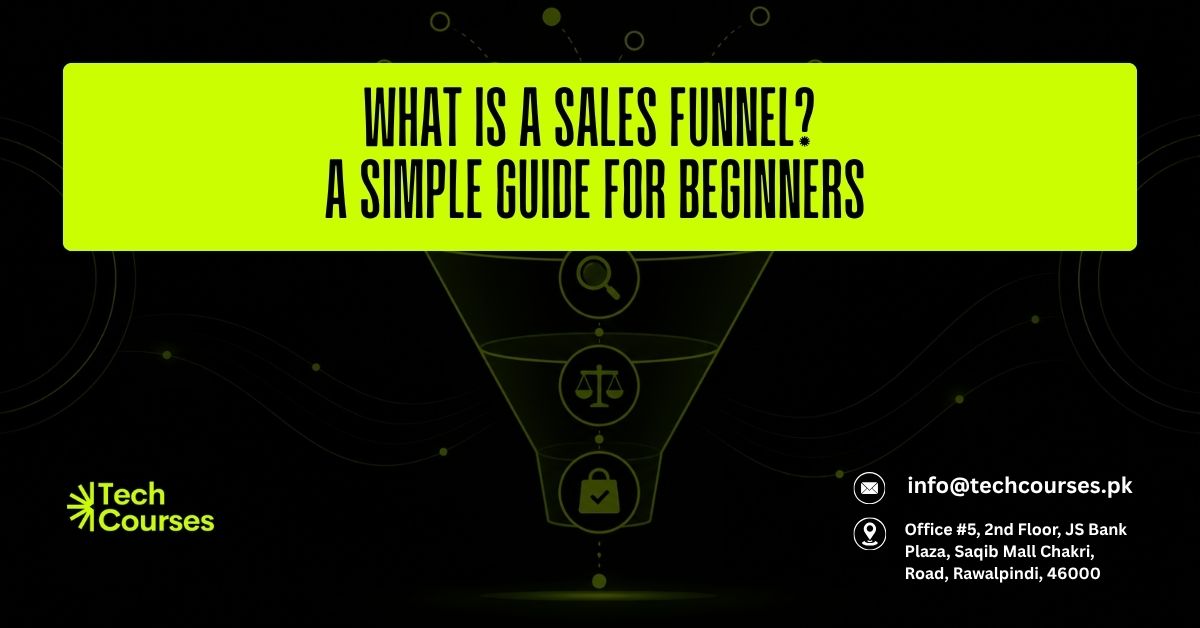
A sales funnel is the step by step path a person takes from first hearing about your business to buying from you. It has four main stages, awareness, interest, decision, and action, and knowing these stages helps you turn more visitors into paying customers instead of losing them along the way.
What Is a Sales Funnel?
A sales funnel is a step by step path that guides potential customers from the moment they first learn about your business to the moment they make a purchase. It is called a funnel because a large number of people enter at the top, but only a smaller group makes it to the bottom and buys.
This shape is normal, not a flaw. At the top, people are just discovering you through a blog post, a social media video, or a friend’s recommendation. As they move down, fewer people stay interested, but the ones who remain are more serious buyers. This idea builds on the AIDA model, a marketing framework created in the late 1800s by advertising pioneer Elias St. Elmo Lewis, which broke buyer behaviour into awareness, interest, desire, and action.
Every business already has a sales funnel, even if it was never planned. The real question is whether it guides customers well or loses them at the wrong stage.
Why a Sales Funnel Matters for Small Businesses
A sales funnel matters because it shows you exactly where potential customers lose interest, so you can fix the real problem instead of guessing why sales feel slow. It also helps you plan the right message for the right stage of the buyer’s journey.
For a small business or a freelancer running ads on a limited budget, this is especially useful:
- Tracks the journey: See where people drop off, whether it is right after an ad or after visiting your page.
- Improves your messaging: Send the right content at the right time instead of pitching someone who just discovered your brand.
- Builds trust before asking for a sale: Useful information early makes people more comfortable buying later.
- Saves marketing budget: Focus effort on people closer to buying instead of spending equally on every visitor.
The Four Main Stages of a Sales Funnel
Every sales funnel moves a person through four stages, awareness, interest, decision, and action. Each stage needs a different type of content, because someone who just heard about your brand is not ready to buy yet, and treating them the same way often pushes them away.
Awareness (Top of the funnel)
People discover your brand for the first time through a blog post, a social media post, a Google search, or word of mouth. They know they have a problem, but not much about you yet. Your goal is to be helpful and easy to find.
Interest (Middle of the funnel)
Once aware, people look for more information. They may follow your pages, join your email or WhatsApp list, or read more content. Your goal is to keep offering value without selling too soon.
Decision (Middle to bottom of the funnel)
People now compare you against other options, checking price, features, and reviews. Clear pricing, honest comparisons, and answers to common objections work well here.
Action (Bottom of the funnel)
This is the final step, where a person buys or signs up. A simple checkout process, clear contact options, and quick replies make a real difference.
| Stage | Customer Mindset | Your Main Goal |
|---|---|---|
| Awareness | “I have a problem, let me look around” | Get noticed with helpful, easy to find content |
| Interest | “This looks useful, tell me more” | Educate and build trust, avoid hard selling |
| Decision | “Is this the right choice for me?” | Remove doubts with clear pricing and proof |
| Action | “I am ready to buy” | Make the purchase or sign up simple and fast |
Sales Funnel vs Marketing Funnel: What Is the Difference?
A sales funnel and a marketing funnel are often used to mean the same thing, but there is a small difference. A marketing funnel focuses on attracting and nurturing an audience, while a sales funnel focuses on turning that lead into a paying customer.
Most small businesses do not need to separate the two strictly. What matters is that every stage, from the first ad someone sees to the final sale, is planned instead of left to chance.
A Simple Sales Funnel Example for Beginners
A simple sales funnel example shows how one small offer can move a stranger through all four stages using tools most beginners already have, such as social media, WhatsApp, and a basic website.
Imagine a small business selling handmade candles online:
- Awareness: The owner posts a short reel showing how the candles are made.
- Interest: Viewers who like the reel visit the profile and join a WhatsApp broadcast list for new arrivals.
- Decision: Interested buyers browse the product page, compare prices with other local sellers, and check delivery details.
- Action: They message on WhatsApp or use the website to place an order and pay.
The same structure works for a service business, a local shop, or a freelancer, only the content and platform change.
Common Mistakes Beginners Make With Sales Funnels
Most beginners make funnel mistakes by skipping stages, pushing a sale too early, or never tracking where people drop off. These mistakes waste time and ad budget, and they often confuse potential customers instead of guiding them toward a purchase.
- Trying to sell directly in the very first message or post
- Ignoring people who show interest but are not ready to buy yet
- Having no way to capture leads, such as an email list or WhatsApp group
- Not following up after someone visits a page or asks a question
How to Build Your First Sales Funnel
Building a simple funnel starts with one clear offer, one main traffic source, and one way to capture leads before asking for a sale. You do not need expensive software, just a clear plan and consistent effort at each stage.
- Pick one product or service to focus on first, instead of trying to sell everything at once.
- Choose one traffic source for awareness, such as short videos or posts. A Social Media Marketing Course makes this stage far more effective.
- Build a simple landing page where visitors can learn more and leave their contact details. Skills from a WordPress Course are enough to set this up without hiring a developer.
- Capture leads through an email list or WhatsApp group so you can follow up instead of losing the visitor.
- Nurture and close with helpful content and targeted ads. A Digital Marketing Course covers all of this, SEO, social media, and Google Ads, in one place.
- Grow with search traffic by ranking your pages for what your buyers are already searching, exactly what an SEO Course teaches.
- Offer this as a service once you understand it well. Many students turn funnel building into paid work after a Freelancing Course.
Frequently Asked Questions
What are the 4 stages of a sales funnel?
Awareness, interest, decision, and action. A person discovers your brand, seeks more information, compares options, then finally buys.
Is a sales funnel the same as a marketing funnel?
Not exactly. A marketing funnel focuses on attracting and nurturing an audience, while a sales funnel focuses on turning that audience into paying customers. Most small businesses treat both as one connected journey.
How do I create a sales funnel for a small business?
Start with one offer, one traffic source such as social media or search, a simple landing page, and a way to capture leads like WhatsApp or email. Then nurture those leads with helpful content before asking for a sale.
What tools do I need to build a sales funnel?
A beginner does not need paid funnel software to start. A social media page, a simple WordPress website, a WhatsApp business number, and an email list are usually enough.
Conclusion
A sales funnel is not a complicated system reserved for big companies, it is simply a clear plan for how a stranger becomes a customer. Once you understand the four stages, you can build content and offers that match where your audience actually is. At Tech Courses in Rawalpindi, students learn how to plan and run this exact process through hands on, in person training in digital marketing and SEO, so the funnel is not just theory but something they can build for real businesses.